Long answer: the formula is biomimetic — meaning it’s built to match human skin lipids, not a specific “type.” Oily skin, dry skin, combination, sensitive, acne-prone. Your skin recognizes these fatty acids as its own and absorbs them without drama.
The one exception: if you have a known allergy to any specific botanical in our ingredient list, skip it. Otherwise, your skin doesn’t care what label the beauty industry gave it. It just wants the right lipids.
Fair point. Here’s the distinction:
Breathing Oil is the everyday one. Lightweight, fast-absorbing, works under sunscreen and makeup. This is your “I woke up and my skin looks good” oil.
Deep Breathing Oil is the evening version. Same botanical family, higher concentration. It’s for overnight repair — when your skin does its heaviest regeneration work and can handle richer support.
Most people start with just the Breathing Oil. Add Deep if and when you feel like your skin wants more at night. No pressure.
15 cold-pressed and steam-distilled plant oils, plus natural vitamin E. That’s it.
No synthetic fragrance. No preservatives (the vitamin E handles stability naturally). No water (so no emulsifiers needed). No silicones. No “derm-tested” filler ingredients added so we can put a claim on the box.
If you want the full INCI list with origins, it’s on every product page. We list every ingredient and where it comes from, because we’re actually proud of what’s in there.
Wash your face. While it’s still a little damp, put 4–5 drops in your palms. Take a breath (the scent is worth it). Press gently into your face and neck.
That’s it. You’re done.
Morning, evening, or both. Under sunscreen, under makeup, or solo. It genuinely does not matter. The oil works the same way every time because your skin’s biology doesn’t change based on what you’re wearing over it.
Honestly? Probably not. Most people who switch to this end up phasing out everything else within a month. Not because we told them to — because their skin stopped needing it.
But if you want to keep your vitamin C serum or your retinol or whatever you’re attached to, the oil goes on last, after water-based products. It plays well with others. It just might make you realize the others aren’t doing as much as you thought.
Like nothing you’ve smelled in a skincare product before.
The scent comes entirely from the essential oils themselves — not added fragrance. You’ll get sandalwood first (warm, woody, grounding), then magnolia (clean, slightly floral), and a subtle lift of bergamot citrus.
It fades within a few minutes. People will ask what you’re wearing. It’s not perfume. It’s just what these plants actually smell like when you don’t drown them in synthetic fragrance.
Yes. Not “95% natural with a few things we’d rather not talk about.” Not “natural-derived.” Not “clean beauty” which is a term that means literally nothing.
Every ingredient is a plant extract. Cold-pressed or steam-distilled. No synthetic molecules. No lab-created “nature-identical” compounds. Cruelty-free. Vegan.
We could get the same label claims for half the cost by cutting corners. We don’t. That’s why the bottle costs what it costs.
US only, for now. We’re working on international shipping, but customs regulations for essential oil products are… a process. We’d rather do it right than do it fast.
Free shipping on all orders over $50.
15 botanicals. 10 countries.
Where it all comes from.
Every ingredient earned its place. Cold-pressed, steam-distilled, hand-harvested — from the source we trust most, not the cheapest one we could find.
Tap a pin to explore each origin
Iberian Peninsula
Spain
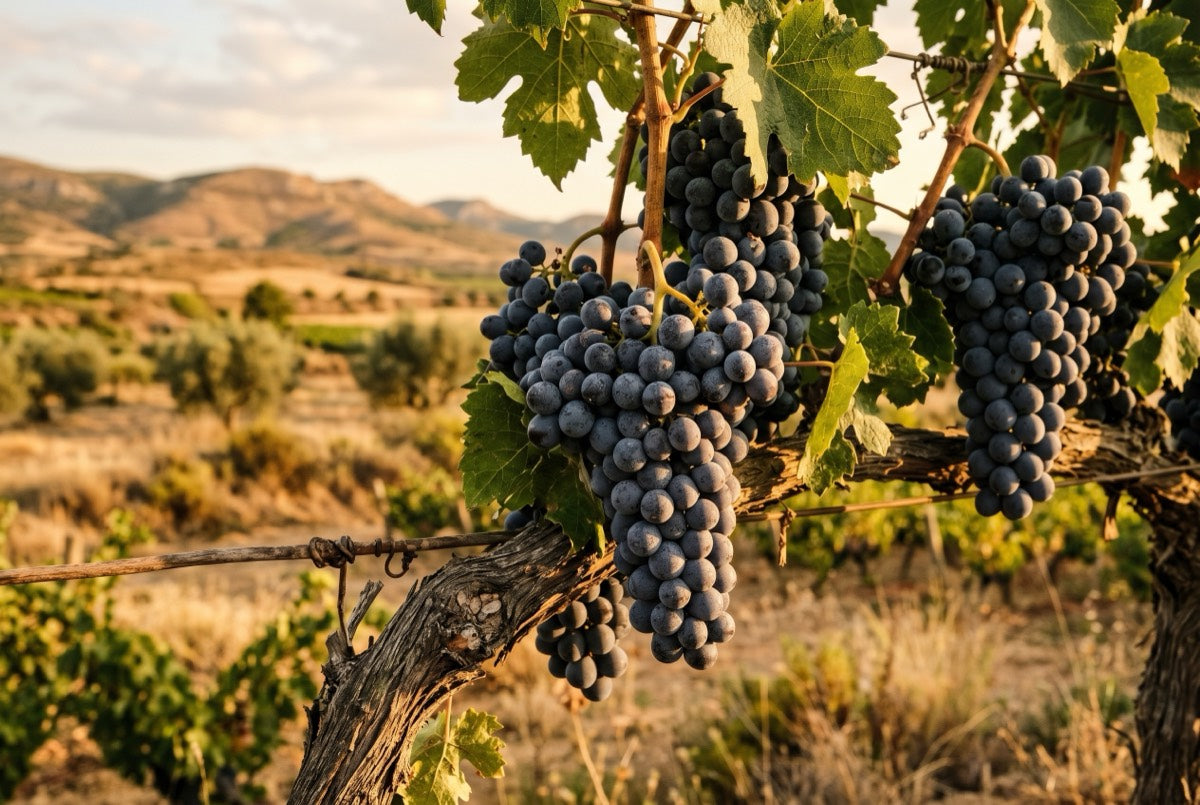
Grape Seed Oil
Vitis Vinifera
Why this place
Spanish grape seed oil carries one of the highest concentrations of proanthocyanidin among all plant oils — an antioxidant 50x more potent than vitamin E. The hot, dry Mediterranean climate of La Mancha and Rioja stresses the grapes into producing these protective polyphenols at levels cooler climates can’t match.
What it actually does
The formula’s lightweight base. Absorbs instantly, never greasy. Its linoleic acid corrects the fatty acid imbalance that makes pores clog, while proanthocyanidins neutralize free radicals before they damage collagen.
“Grape seed oil is in everything — but most of it is refined, bleached, and stripped. Cold-pressed Spanish grape seed retains the polyphenol content. That’s the whole point.”
Sub-Saharan Savanna
Africa
Baobab Seed Oil
Adansonia Digitata
Why this place
The baobab tree survives 2,000+ years in some of the driest conditions on Earth by storing up to 120,000 liters of water in its trunk. Its seeds contain all three omega fatty acids (3, 6, and 9) in near-perfect balance — a rarity in the plant kingdom.
What it actually does
Deep nourishment without heaviness. Baobab oil restores elasticity in dehydrated, stressed skin by replenishing the exact fatty acid ratios your lipid barrier needs. It’s the ingredient that makes this oil work for both dry and combination skin simultaneously.
“A tree that survives 2,000 years in the driest place on Earth knows something about holding onto moisture. I wanted that intelligence in the bottle.”
Pacific Northwest
United States
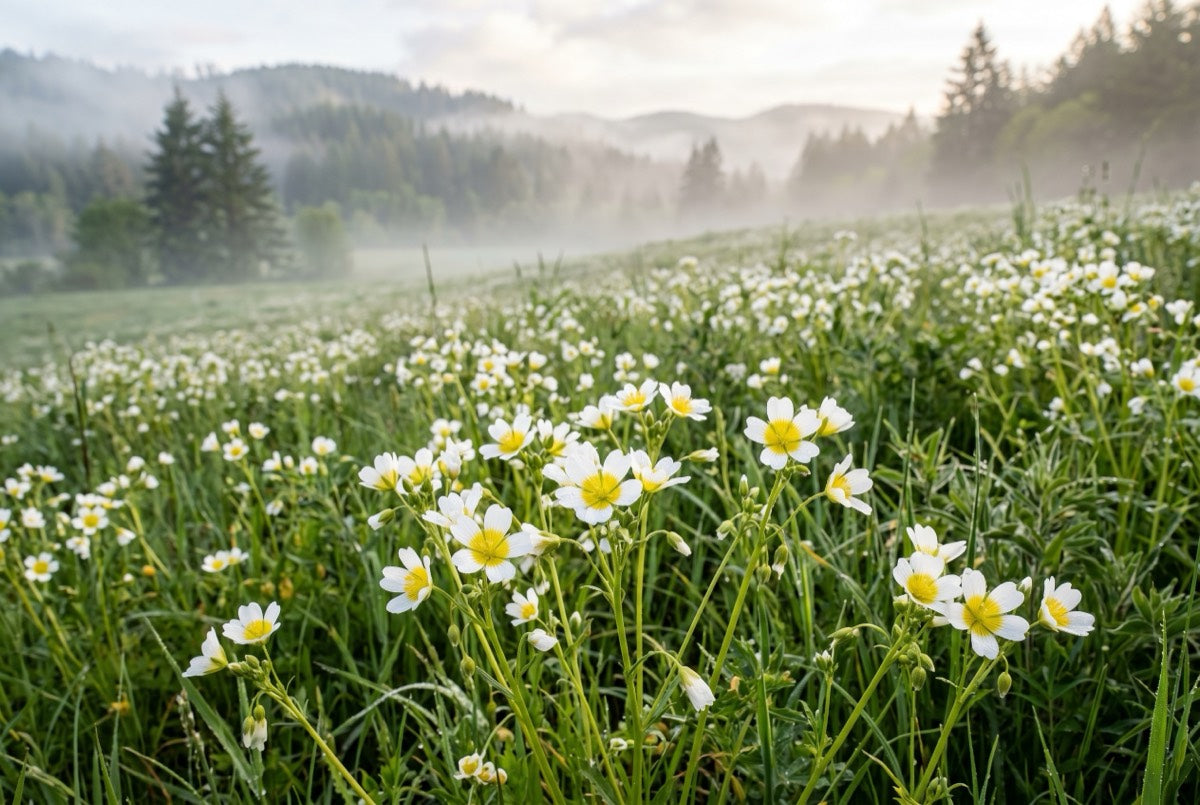
Meadowfoam · Jojoba
Limnanthes Alba · Simmondsia Chinensis
Why this place
Meadowfoam is native to the Pacific Northwest and produces seed oil with over 98% long-chain fatty acids — the longest of any known plant. These molecules form a moisture-locking mesh that no short-chain oil can replicate. Jojoba, from the American Southwest, is a liquid wax ester molecularly identical to human sebum.
What it actually does
Meadowfoam is the formula’s seal — it locks in every other active ingredient and prevents transepidermal water loss. Jojoba is the delivery system: your skin can’t tell the difference between jojoba and its own oil, so absorption is instant and pore congestion is zero.
“These two are the unsung heroes. Meadowfoam seals everything in, jojoba carries everything through. Not glamorous. Completely irreplaceable.”
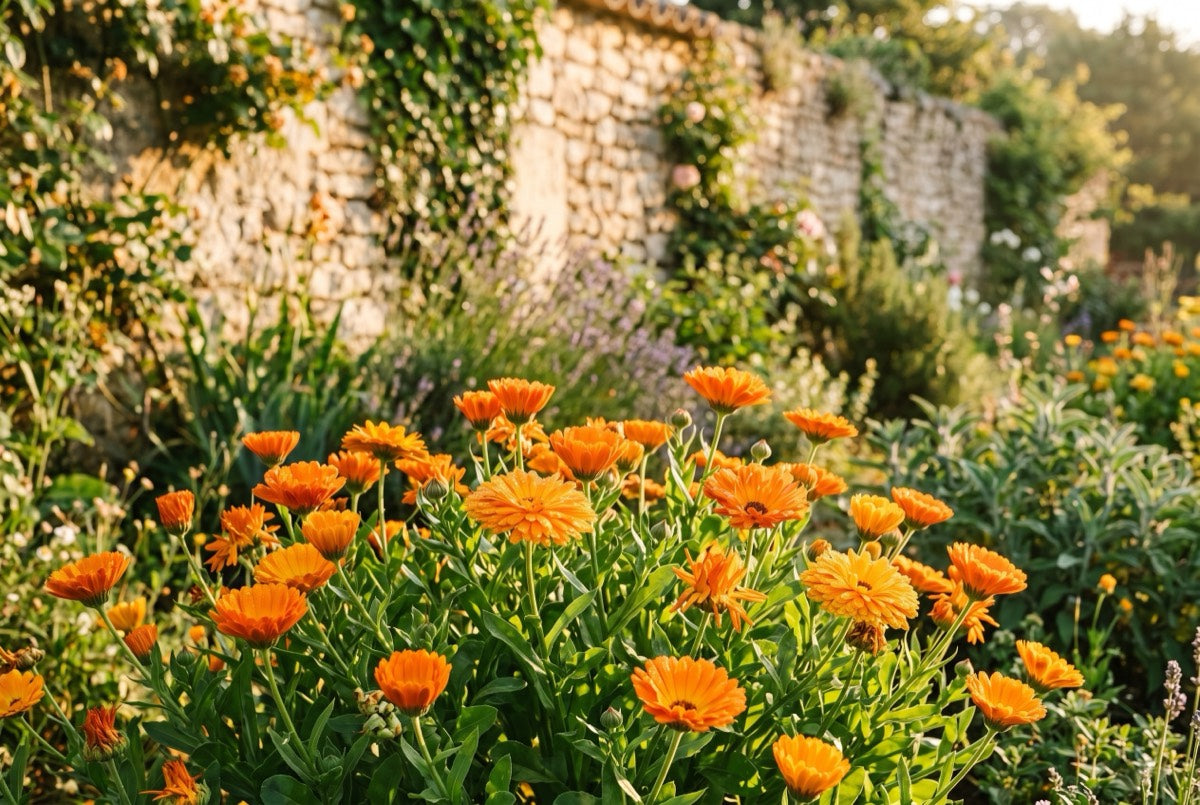
France contributes three precision ingredients. Calendula is infused (not distilled) in Normandy to preserve its full spectrum of healing flavonoids. Raspberry seed oil from French brambles contains natural UV-filtering compounds. Carrot seed oil from Provence is the richest natural source of beta-carotene and vitamin A.
What it actually does
Calendula is the formula’s healer — it calms irritation, accelerates wound recovery, and soothes post-inflammatory redness without any active-ingredient sting. Raspberry seed adds a subtle layer of environmental protection. Carrot seed drives cell renewal and gives skin that lit-from-within warmth.
“Three ingredients, three completely different jobs. The French have been perfecting this for 400 years. I wasn’t going to argue with 400 years.”
Patagonia
Chile
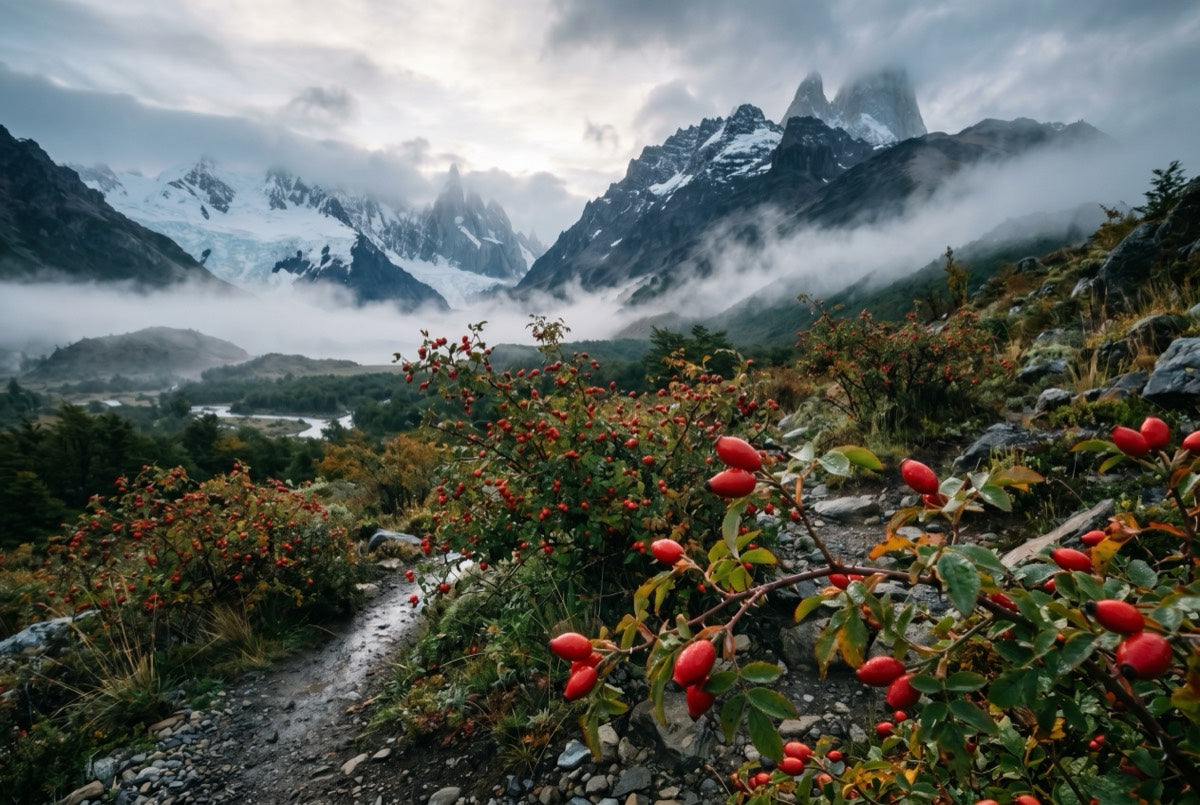
Rosehip Seed Oil
Rosa Rubiginosa
Why this place
Chilean Rosa Mosqueta grows wild across Patagonia’s harsh terrain — thin air, extreme UV, temperature swings. The plant produces trans-retinoic acid as a survival mechanism, making its seeds the highest natural source of this compound. This is nature’s retinol — same molecule, plant-derived.
What it actually does
The formula’s renewal engine. Trans-retinoic acid accelerates cell turnover without the flaking, peeling, or sun sensitivity of synthetic retinol. It fades hyperpigmentation, softens texture, and stimulates collagen — gently.
“Eastern European rosehip is a fraction of the price. It also has a fraction of the trans-retinoic acid. When you’re putting 15 ingredients in one bottle, you don’t get to be cheap about any of them.”
Pharmaceutical Heritage
Germany
Vitamin E
Tocopherol
Why this place
German-distilled natural tocopherol is extracted from plant sources with pharmaceutical-grade precision. Germany’s botanical chemistry tradition — dating to the first isolation of vitamins in the early 20th century — ensures a purity standard that commodity suppliers don’t match.
What it actually does
The formula’s preservative and antioxidant shield. Vitamin E prevents the other 14 oils from oxidizing (going rancid), extends shelf life naturally, and provides an additional layer of free-radical protection for skin cells. It also enhances the absorption of every oil it’s blended with.
“Nobody puts vitamin E on their Instagram. But without it, your $72 oil goes rancid in two months. German pharmaceutical-grade. Every batch. The unsexy ingredient that keeps everything else alive.”
Karnataka & Tamil Nadu
India
Sandalwood · Frankincense
Santalum Album · Boswellia Carterii
Why this place
Indian sandalwood from Karnataka contains 90%+ α-santalol — the compound behind its extraordinary anti-inflammatory power. Australian sandalwood maxes out at 25%. The Mysore region’s altitude, soil chemistry, and 30+ year growth cycle produce heartwood no plantation shortcut can replicate. Frankincense from East Africa has been used in healing rituals for 5,000 years — and modern research confirms its boswellic acids stimulate collagen production.
What it actually does
Sandalwood is the anchor. It calms inflammation at the cellular level — not by masking redness, but by interrupting the irritation cycle. Frankincense accelerates cell regeneration and firms skin by boosting collagen synthesis. Together they’re why this oil works on sensitized, reactive skin without burning or stinging.
“Indian sandalwood is endangered and expensive. We could have used Australian — most brands do. But when you’re making one oil, the one oil, you don’t cut corners on the ingredient that defines it.”
Yunnan & Southern Provinces
China
White Magnolia Leaf
Michelia Alba
Why this place
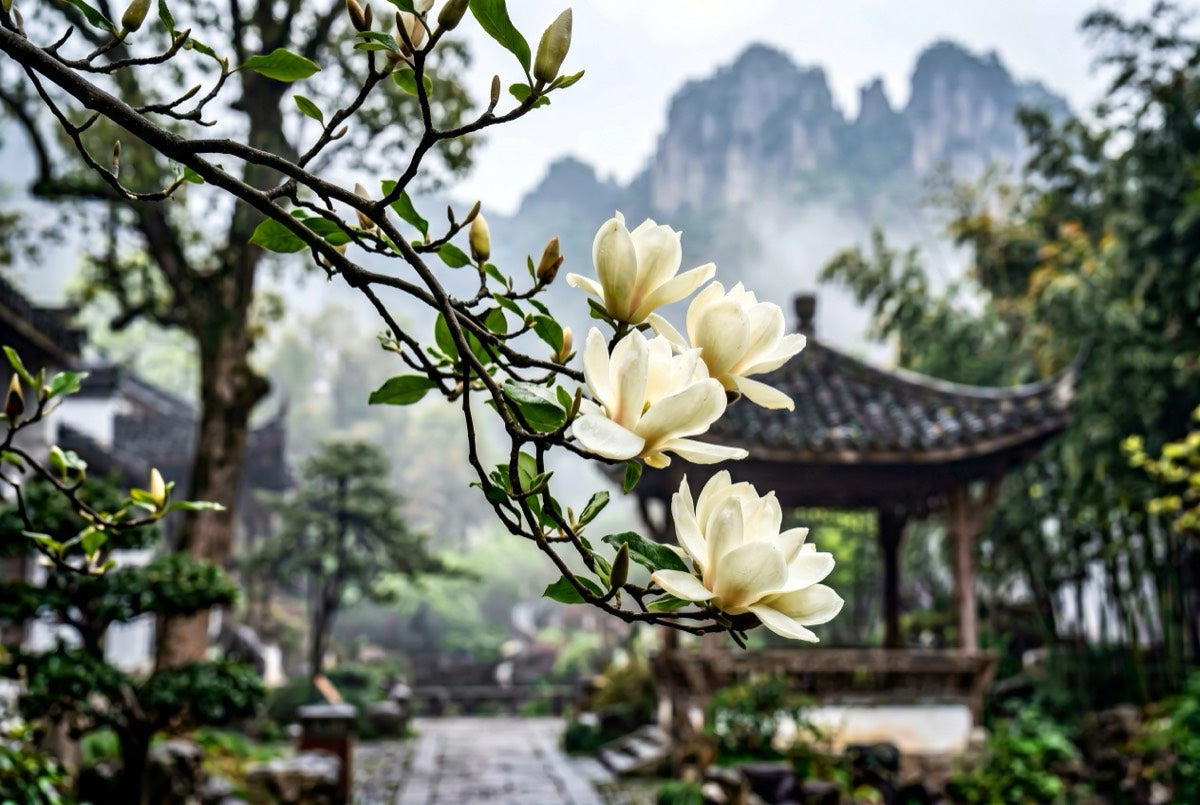
Michelia alba has been cultivated in Chinese gardens for over a thousand years — not just for its intoxicating fragrance, but for its medicinal properties documented in traditional Chinese pharmacopoeia. The leaf oil, steam-distilled from southern Chinese plantations, contains linalool and methyl eugenol in a ratio unique to this species.
What it actually does
The formula’s calming note — both for skin and senses. Magnolia leaf oil reduces stress-related skin inflammation (cortisol damage) and provides gentle brightening through its antioxidant compounds. Its scent is the first thing you notice when you open the bottle.
“Magnolia won’t be on any ‘trending ingredients’ list. That’s fine. It calms stressed skin, it brightens, and it’s the reason people close their eyes when they put this oil on. Sometimes the best ingredient is the one nobody else is paying attention to.”
Atlas Mountains
Morocco
Atlas Cedar · Rockrose
Cedrus Atlantica · Cistus Ladaniferus
Why this place
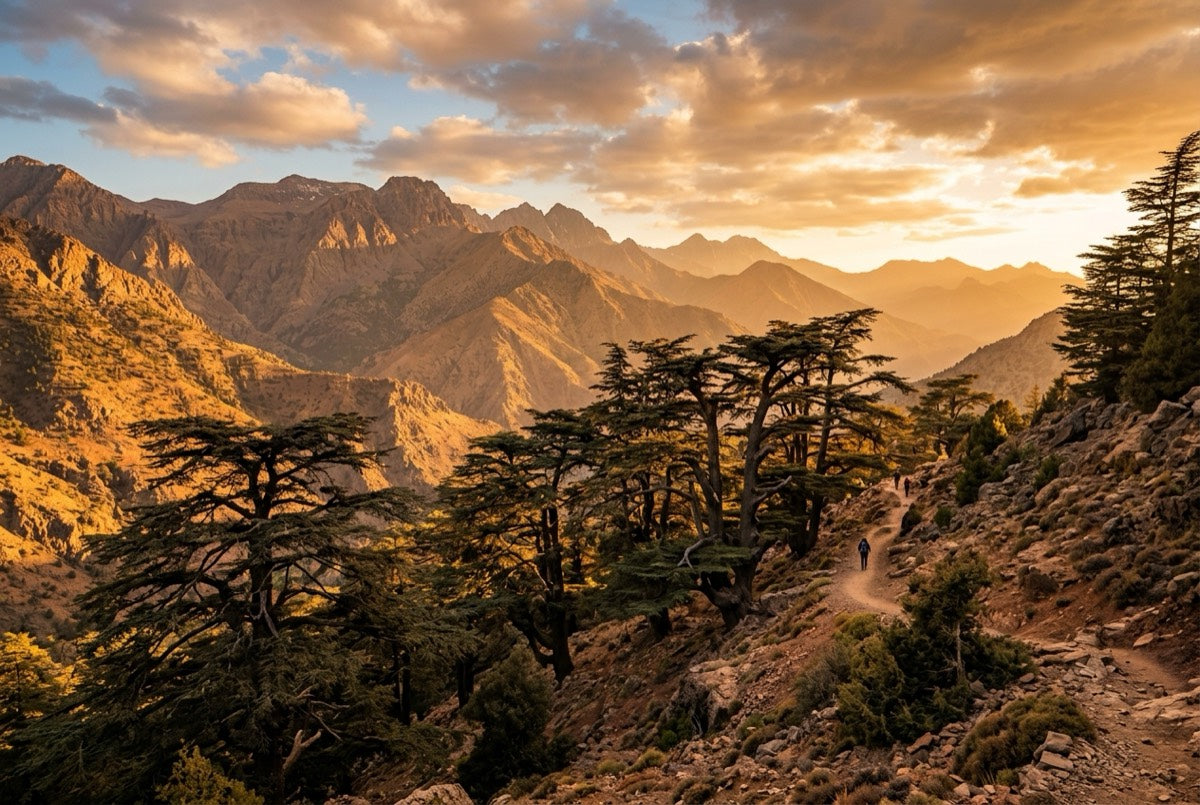
Atlas cedar grows at 1,500–2,000m elevation in the Moroccan mountains, producing essential oil rich in sesquiterpenes — compounds that regulate sebum production at the hormonal level. Rockrose (cistus) from the same region has been used since antiquity for wound healing; its labdanum resin contains some of the most potent anti-aging terpenes known.
What it actually does
Cedar is the formula’s oil-balancer — it signals overactive sebaceous glands to slow down without stripping or drying. Rockrose is the repair agent: it tightens pores, accelerates wound healing, and provides intense antioxidant protection. They’re the reason this oil works for acne-prone skin.
“Cedar and rockrose don’t have a marketing story. They have 3,000 years of continuous use and a stack of clinical papers. I’ll take that over a trending TikTok ingredient any day.”
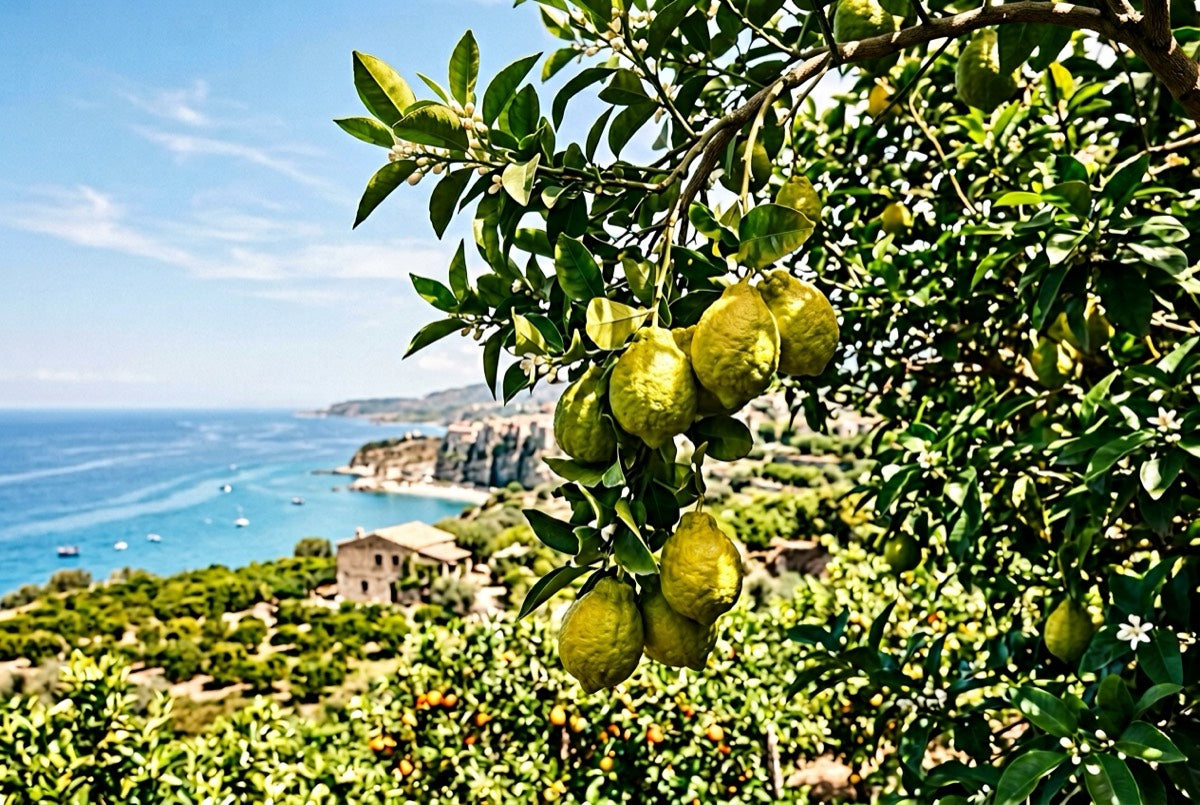
Calabria
Italy
Bergamot
Citrus Bergamia
Why this place
Bergamot grows almost exclusively in Calabria — the toe of Italy’s boot — where a unique microclimate of Ionian Sea breezes and volcanic soil produces peel oil with the highest linalyl acetate content of any citrus. Cold-pressed, not distilled, to preserve its full aromatic complexity.
What it actually does
Bergamot is the formula’s skin-tone equalizer. It brightens hyperpigmentation, calms inflammation, and provides natural antibacterial protection. It also gives the oil its subtle citrus top note — the first layer of scent before the deeper sandalwood and magnolia emerge.
“We use FCF bergamot — furocoumarin-free — so it won’t cause photosensitivity. The Calabrian producers developed this process specifically for skincare-grade oil. It costs more. It’s non-negotiable.”
Every ingredient has a story. Every story starts with a place.